Total Lunar Eclipse – January 21st, 2000

Times for Total Lunar Eclipse As Seen From Liverpool

EVENT TIME (UT) ALTITUDE AZIMUTH
First Penumbral Contact 02hr:02m:54s 51° 222°
First Umbral Contact 03hr:01m:24s 44° 239° P.A. 80°
TOTALITY BEGINS 04hr:05m:36s 36° 254°
Maximum Eclipse 04hr:44m30s 31° 262° Mag 1.330
TOTALITY ENDS 05hr:22m:18s 25° 270°
Last Umbral Contact 06hr:25m:24s 16° 282° P.A. 294°
Last Penumbral Contact 07hr:24m:06s 08° 292°
Moon Sets At 08hr:24m:00s

Society News and Night Sky Notes – January 2000

Society News Headlines

  • Jan 1st – Only 1 more year until the TRUE start of the next millennium.
  • Jan 3rd – Moon 3° North of Venus.
  • Jan 3rd – Earth at Perihelion at 06hr:00m (0.983320AU).
  • Jan 4th – Max for Quadrantids meteor shower (ZHR 80 per hour).
  • Jan 5th – 95th Anniversary (1905) of Perriine’s discovery of Saturn’s Moon Elara
  • Jan 6th – Moon 4° North of Mercury.
  • Jan 7th – Public Open Night at The Pex Hill Observatory 7:30pm – 9:30pm.
  • Jan 7th – 390th Anniversary (1610) of Galileo’s discovery of 3 of Jupiter’s Moons.
  • Jan 10th – Moon 2° South of Mars.
  • Jan 12th – Royal Astronomical Society’s 180th Birthday! (1820 – 2000).
  • Jan 14th – LAS Sidewalk Astronomers – Leasowe Lighthouse, Wirral 7:30 – 9:30pm
  • Jan 14th – Moon 4° South of Jupiter.
  • Jan 15th – Moon 3° South of Saturn.
  • Jan 16th – Mercury at Superior Conjunction.
  • Jan 20th – Buzz Aldrins’s 70th birthday (b1930). 2nd Man to walk on the Moon.
  • Jan 21st – LAS January Monthly meeting at 7pm in the Crypt of the RC catheral.
  • Jan 21st – Total Lunar Eclipse, max form Liverpool at 04hrs:44mins:30secs.
  • Jan 21st – Total Lunar Eclipse – Details for Liverpool.
  • Jan 26th – BAA Ordinary Monthly Meeting – 5:45pm London.
  • Jan 27th – Pallas at opposition.

THE NIGHT SKY DURING THE MONTH OF JANUARY 2000

Will it be cloudy to-night?, ask the The U.K. Goverment Met Office Weather service. To make your own star chart fo your location at any time, Click Here.


The Sun and Moon

All times are in GMT, the same as U.T. Times For Observer in Liverpool, Merseyside, England, U.K.

Latitude 53 degs 24 mins North.
Longitude +3.0 degs West.

            1st          6th        11th      16th      21st      26th        31st
SUNRISE    08:28        08:26      08:24     08:19     08:14     08:07       08:00
SUNSET     16:03        16:09      16:16     16:24     16:33     16:44       16:52
PHASES OF THE MOON DURING JANUARY 2000
NEW MOON
on 6th
at 20h:20m
FIRST QUARTER
on 14th
at 13h:54m
FULL MOON
on 21st
at 14h:56m
LAST QUARTER
on 28th
at 00h:03m

Total Lunar Eclipse on 2000 January 21st.

Details Here.
Details for Liverpool.


To herald in the new year and century, the Earth is at perihelion on the 3rd at a diatance of 0.983320 Astronomical Units (1 Astronomical Unit is equivalent to 149.6 million Kilometers). Perihelion is the closest any body approaches the Sun. Its opposite is aphelion, when a body is furthest from the Sun in its orbit. The following day the Moon reaches its furthest point from the Earth – its apogee – in 2000. It lies at a distance of 406,418 kilometers.


THE PLANETS THIS MONTH.


MERCURY.

Mercury is at superior conjunction on the 16th but by the end of the month starts to make an appearance in the evening sky. It won’t be until early February though when the planet becomes favourable.


VENUS.

Venus finishes off the excellent morning apparition which began back in August last year. It very quickly heads towards the rising Sun through the next couple of months with the Moon passing 2° North on January 3rd at 05hr:00m. Owners of telescopes and binoculars may like to have a look on the 4th as Venus appears to have acquired a satellite. It is in fact the brightish star nu Scorpii which Venus passes just 25 arcminutes North of in the early hours of the morning.


MARS.

Mars was at opposition in 1999 and as its year is roughly twice the length of the Earth’s it means that 2000 sees the red planet heading towards solar conjunction around the middle of the year. Before it gets too small and hard to observe watch it as it tracks through the faint constellation of Aquarius this month with the Moon passing 2.5° South on the 10th. Again, telescope owners may like to investigate closely using a high magnification and observe that the planet isn’t a complete disk. In fact it shows a distinct phase of 93% at the start of the month increasing to 95% at the end due to us seeing the planet slightly sideways on. All the outer planets show a phase to some extent but it is only in Mars where this is noticeable even to the most casual of observers.

MARSWATCH – latest observations of the red planet.


ASTEROIDS.

  • Pallas at opposition on January 27th at V Mag of 7.4
  • Melpomene at opposition on January 18th at V Mag of 9.2

For More information on Asteroids Click Here.


JUPITER.

Jupiter, is also heading towards solar conjunction in May and so is purely an evening object by the time January comes to an end. On the 14th Jupiter id 3° North of the Moon and on the 30th lies just half a degree North of the star Omicron Piscium

Launched in October 1989, the Galileo Jupiter Probe entered orbit around the great planet on December 7th 1995. The Project Galileo Homepage will give you up-to-date information and the very latest images returned.


SATURN.

Saturn is just ahead of Jupiter as the two gas giants pass through the constellation of Pisces. Later this year the two will meet up with Jupiter “racing” past Saturn. Saturn’s rings system is tilted at an angle of 19° so that the planet’s Southern hemisphere is on view. With the planet’s orbital plane so inclined any satellites on view will be also similarly tilted with the effect thatthey could appear to lie above and/or below the disk of the planet itself.


URANUS and NEPTUNE.

Both Uranus and Neptune are at or near solar conjunction and are unfavorable for observations until June.


PLUTO.

Pluto will be out of view until after April in morning skies.


METEORS.

  • January 4th Quadrantids ZHR is 80 per hour. ( Fairly favourable)

COMETS.

  • January 2nd – Comet Temel 1 at perihelion (1.500AU).
  • January 11th – Comet Wiseman – Skiff at Perihelion (1.569AU).
  • January 17th – Comet C/1999 k8 (Linear) at Perihelion (4.845AU).

Plus these pages will give daily and weekly reports of this and other Comets progress.


OCCULTATIONS.

  • Jan 11th at 18hr:14m Disappearance of psi Aquarii 1
  • Jan 11th at 18hr:43m Disappearance of psi Aquarii 2.
  • Jan 15th at 21hr:51m Disappearance of mu Ceti (Mag 4.3).
  • Jan 15th at 22hr:34m Reappearance of mu Ceti (Mag 4.3).
  • Jan 25th at 07hr:03m Reappearance of 7 Virginis (Mag 5.4).
Society News and Night Sky Notes – December 1999

Happy Christmas and clear, dark skies for 2000
from all members of Liverpool Astronomical Society

Society News Headlines

  • Dec 3rd: Pluto in conjunction with the Sun.
  • Dec 3rd: Mercury at greatest elongation (20°W).
  • Dec 3rd: Mars Polar Lander Touch-down To-day.
  • Dec 3rd: Venus 3° South of Moon.
  • Dec 3rd: Public Open Night at The LAS Pex Hill Observatory, 7:30pm – 9:30pm.
  • Dec 5th: Vesta 0.4° South of Moon.
  • Dec 6th: Mercury 3° South of Moon.
  • Dec 8th: LAS members short papers night at 7pm, at RC Cathedral Crypt Concert Room.
  • Dec 10th: Pallas stationary.
  • Dec 10th: Members night at The LAS Pex Hill Observatory, 7:30pm til Late!.
  • Dec 11th: Neptune 0.07° North of Moon.
  • Dec 12th: Mars 0.6° South of Moon.
  • Dec 12th: Lunar Occultation of the planet Mars.
  • Dec 12th: Lunar Occultation of the planet Mars, Map.
  • Dec 12th: Uranus 0.2° North of Moon.
  • Dec 14th: Geminids meteor shower max at 10hr:00m.
  • Dec 14th: Mars 0.7° South of Uranus.
  • Dec 15th: Salford AS Christmas Lecture: A history of women in astronomy by Dr Allan Chapman. Salford University at 7:30pm.
  • Dec 17th: Mercury 5° North of Antares.
  • Dec 18th: BAA Christmas Lecture at Scientific Societies Lecture Room, London,at 2pm.
  • Dec 18th: Jupiter 4*#176; North of Moon.
  • Dec 19th: Saturn 3° North of Moon.
  • Dec 21st: Jupiter Stationary.
  • Dec 21st: Aldebaran 1.3° South of the Moon.
  • Dec 22nd: Winter Solstice at 08hr:00m.
  • Dec 28th: Juno in conjunction with Sun.

THE NIGHT SKY DURING THE MONTH OF DECEMBER 1999

Will it be cloudy to-night?, ask the The U.K. Goverment Met Office Weather service. To make your own star chart fo your location at any time, Click Here.


The Sun and Moon

All times are in Greenwich Mean Time (G.M.T.)
For Observer in Liverpool, Merseyside, England, U.K.
Latitude 53 degs 24 mins North.
Longitude +3.0 degs West.

            2nd      7th      12th      17th      22nd      27th       31st
SUNRISE    08:06    08:12    08:18     08:23     08:26     08:27      08:28
SUNSET     15:57    15:54    15:53     15:53     15:55     15:59      16:03

On the 22nd the Sun reaches its winter solstice when the Sun halts its apparent motion in declination. At midday it is at its lowest altitude for the year and conseqently it is the shortest day of the year. December is also the month when the Moon’s varying ellipticity brings it closest to the Earth in 1999 (on the 22nd at 356,653km) and puts it at its furthest away from us (on the 8th at 406,624km).


PHASES OF THE MOON DURING DECEMBER 1999
NEW MOON
on 7th
at 22hr:33m
FIRST QUARTER
on 16th
at 00hr:51m
FULL MOON
on 22nd
at 17hr:32m
LAST QUARTER
on 29th
at 14hr:05m

THE PLANETS THIS MONTH.


MERCURY.

Mercury puts on a fine display in the morning sky, this table shows were to look using Venus and the Moon as signposts.

Info Sheet: Mercury and the Moon in the morning sky, November - December 1999

Click to enlarge
Mercury and the Moon in the morning sky, November – December 1999


VENUS.

Venus remains a morning object into 2000 although its altitude at the time of civil twilight is now noticeably lessening. On the 3rd Venus is 2° South of the Moon at 22hr:00m, and shows a gibbous phase at 71% and an apparent diameter of 16″.


MARS.

Before Mars passes too close to the solar glare to be easily found, a rare event occurs. On the 12th the dark limb of the crescent Moon passes directly in font of the red planet – a planetary occultation. The occultation starts at 19hr:12m very low down in the South West – at the time of disappearance the Moon is only 6° above the horizon so you will need an unobstructed view such as a sea horizon or from a hilltop if you are not to be disappointed. With the Moon only 19% sunlit, the dark hemisphere may be gently lit by the ghostly light known as Earthshine. This is sunlight reflected from the Earth again. If this is indeed visible then go out an hour or so before the event starts and watch the Moon edge slowly towards Mars. A telescope using a high magnification will offer the best view but binocular owners should also have a nice wide-field view.

MARSWATCH – latest observations of the red planet.
Mars Global Surveyor Latest news from orbit.


JUPITER.

Jupiter is 4.5° North of the Moon on the 18th at 08hr:00m and shows a disk 47″ across.

Launched in October 1989, the Galileo Jupiter Probe entered orbit around the great planet on December 7th 1995. The Project Galileo Homepage will give you up-to-date information and the very latest images returned.


SATURN.

Saturn is 3.5° North of the Moon on the 19th at 11hr:00m and shows a disk 19″ across.


URANUS and NEPTUNE.

Both are poorly placed for observations during this period.


PLUTO.

Poorly placed for observations during this period.


METEORS

12th                                          Geminids                         70  Per Hour       Favouable 

24th                                          Ursids                           12  Per Hour       Unfavourable 
Click Here.                                                                                 
Click Here.

COMETS.

  • Dec 9th – Comet Machholz II at Perihelion (0.749 AU).
  • Dec 10th – Comet Shoemaker-Levy 8 at Perihelion (2.721 AU).
  • Dec 16th – Comet Schuster at Perihelion (1.550 AU).
  • Dec 27th – Comet Wild 1 at Perihelion (1.961 AU).
  • Dec 31st – Comet C/1999 L3 (Linear) at Perihelion (2.099 AU).

Plus these pages will give daily and weekly reports of this and other Comets progress.


OCCULTATIONS

  • Dec 12th at 19hr:12m Disappearance of The Planet Mars
  • Dec 13th at 16hr:50m Disappearance of Delta Capricorni

David Forshaw’s Total Solar Eclipse 1999 Observations

Eclipse 1999 Observations by David Forshaw

From Godyum, near Sivas, Turkey

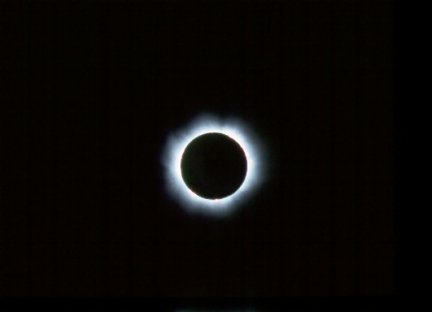
Total Solar Eclipse, August 1999 taken by David Forshaw in Goydum, near Sivas, Turkey, using a 500mm lens and Agfa film at 200 ASA for 1500th second

1/500th second

Total Solar Eclipse, August 1999 taken by David Forshaw in Goydum, near Sivas, Turkey, using a 500mm lens and Agfa film at 200 ASA for 1/4th second

1/4th second

Total Solar Eclipse, August 1999 taken by David Forshaw in Goydum, near Sivas, Turkey, using a 500mm lens and Agfa film at 200 ASA for 1/1000th second

1/1000th second

Total Solar Eclipse, August 1999 taken by David Forshaw in Goydum, near Sivas, Turkey, using a 500mm lens and Agfa film at 200 ASA for 1/125th second

1/125th second

Taken using a 500mm lens and Agfa film at 200 AS
All Images are © David Forshaw


Total Solar Eclipse 1999 – LAS Members’ Observations

Society Members Reports & Images

Total Solar Eclipse, August 1999 at 10:41 UT, taken by Gerard Gilligan from Altmunster, Salzkammergut Region, Austria, using Pentax K 1000 SLR Camera, fitted with 500mm f8 Canton Lens. Film used was Kodak Elite, 400 ASA slide film.


NASA RP 1398:TOTAL SOLAR ECLIPSE of 1999 AUGUST 11th.


 Liverpool – England


Scilly Isles, Cornwall, Devon – SouthWest England


From Europe – France


From Europe – Austria

Total Success! John Knott & Gerard Gilligan at Altmunster, Salzkammergut Region, Austria for the Total Solar Eclipse, August 1999


From Europe – Hungary


From Eastern Europe – Bulgaria


From Eastern Europe – Turkey


Please Note: With the exception of its own web pages Liverpool Astronomical Society is in no way responsible for the eclipse viewing advice and contents of the other Internet links and web sites given on this page.

Morning Sky Apparition of Mercury – November/December 1999

Greatest Elongation West On December 3rd at 20.4°

Info Sheet: Mercury and the Moon in the morning sky, November - December 1999

Click to enlarge
Mercury and the Moon in the morning sky, November – December 1999

MERCURY VENUS MOON
DATE TIME (GMT) ALTITUDE ° AZIMUTH ° ALTITUDE ° AZIMUTH ° ALTITUDE ° AZIMUTH °
November 22nd 07hr:03m 4.8 123 27.2 145 * *
November 27th 07hr:11m 8.7 129 26.2 149 * *
December 2nd 07hr:18m 9.3 132 24.4 150 * *
December 4th 07hr:21m 8.7 132 23.9 150 36.3 166
December 5th 07hr:22m 8.3 132 23.5 151 15.3 137
December 6th 07hr:23m 8.0 133 23.1 151 7.8 129
December 7th 07hr:24m 8.1 134 23.1 152 * *
December 12th 07hr:29m 6.1 134 21.1 153 * *
December 17th 07hr:33m 3.8 134 19.7 154 * *

Solar Eclipse 11th August 1999 Report: Andrew & Ann Bate (Tresco, Isles of Scilly)


Tresco is the second largest of the Scilly Isles. No cars are to be found on the few roads Tresco has. It is either bicycle or walk: from one end to the other it is less than two miles. Getting to the scillies involves either a two hour boat trip or a twenty minute helicopter ride. The weather forecast had not been at all promising, in fact the Scilly Isles were given to be the worst for weather for the entire track of totality across England. The day dawned. Sure enough cloud was everywhere, and there was a slight drizzle from time to time. These conditions prevailing we decided to go to a place where there was shelter close at hand, the church yard of St.Nicholas’ church.

As the sky was overcast and steady rain had set in, hopes of seeing and photographing the sun’s corona etc had faded, so no great preparation of cameras had been made. It was my hope to set up a video camera under a plastic sheet to record the darkening and lighting of the landscape; this camera, having had its clock synchronised to the Rugby time signal, was recording the time on the picture. The automatic exposure adjustment being disabled, the resulting recording would show what time totality started and ended.

Totality was predicted for 11:09 hrs. At 11:05 the video camera was set up under its protective sheet. By this time it was getting quite gloomy. The lights inside the church were on and it was noticeable that they appeared much brighter than they had half an hour previously. Then it stopped raining, and believe it ot not the crescent sun was visible through thin cloud.

We watched through our eye screens as second contact came and nothing could be seen through them; so to naked eye observation. There was the corona, through high cloud but it was there and clear. From the distance came the sound of ship fog horns and cheering in the black and white environment the only colour was the bright red of the solar prominences peeping out from the edge of the black moon against the silvery inner corona. Binoculars were needed to see the prominences. Then the diamond ring of third contact and it was all over. The build up, the anticipation and all the media hype of the preceding days, years even, were now consigned to the memory and history.

Reflecting on the events of the day, the following points stand out:

  • That the sky should clear just in time for us to see it, then cloud over again- was unbelievable.
  • That hundred seconds or so of totality seemed the shortest one hundred seconds ever.
  • The darkness was a very eerie kind, a bit like that just before a heavy thunder storm, but much deeper. It had a sort of greyness about it and the horizon round about was lighter.
  • It looked as though it should be colder, but I did not notice feeling any cooling.

It is very easy to see why primitive civilisations took fright in these circumstances.

Summer Lecture Program, June – September 1999

Summer Lectures for 1999

  • June 1999
    • Venue/Dates/Speakers and Subjects to be confirmed
  • July 1999
    • 28th: Dr Eric Jones – “Chasing The Moon’s Shadow” (link removed as URL is invalid) – Special Ticket Only Public Lecture at Liverpool University.
  • August 1999
    • Venue/Dates/Speakers and Subjects to be confirmed
  • September 1999
    • Venue/Dates/Speakers and Subjects to be confirmed

Society News and Night Sky Notes – November 1999

Society News Headlines

  • Nov 3rd – Venus is 3° South of Moon.
  • Nov 3rd – Taurid Meteor Shower Peak.
  • Nov 3rd – Comet C/1999 S3 (Linear) at Perihelion (1.924 AU).
  • Nov 5th – Mercury is stationary.
  • Nov 6th – Saturn is at opposition.
  • Nov 6th – Leeds Astromeet 1999 (140th Anniversary Event).10:30am – 7:00pm at Centenary House, North Street, Leeds.
  • Nov 7th – SPA meeting at The London Planetarium at 10:00hrs.
  • Nov 12th – Public Open Night at the LAS Pex Hill Observatory. 7:30pm – 9:30pm.
  • Nov 13th – RAS Meeting at Savile Row, London at 16:00UT.
  • Nov 13th – Mars is 3° South of Moon.
  • Nov 14th – Neptune 0.2° South of Moon.
  • Nov 15th – Uranus 0.1° South of Moon.
  • Nov 15th – Transit of Mercury across the Sun. (Not seen from UK).
  • Nov 17th – Leonid Meteor Shower Outburst due 19:45UT,best seen Nov 18th 01:00 – 0200am UT for Liverpool.
  • Nov 17th – Leonid’99 Meteor Outburst Page.
  • Nov 17th – Watch the Leonids LIVE! from Japan.
  • Nov 17th – Leonid Meteor shower information from Sky & Telescope
  • Nov 19th – Liverpool A.S. November monthly meeting – starts 7pm at Liverpool RC Catheral Crypt Concert Room
  • Nov 20th – Jupiter is 4° North of Moon.
  • Nov 22nd – Saturn is 3° North of Moon.
  • Nov 23rd – Aldebaran 1.3° South of moon.
  • Nov 25th – Mercury stationary.
  • Nov 27th – BAA Ordinary Meeting at Rutherford Appleton Lab, Didcot, Oxon.
  • Nov 27th – Comet C/1997 BA6 (Spacewatch) at Perihelion, (3.436AU).
  • Nov 28th – Mars 1.7° South of Neptune.
  • Nov 29th – Venus 4° North of Spica.

THE NIGHT SKY DURING THE MONTH OF NOVEMBER 1999.

Will it be cloudy to-night?, ask the The U.K. Goverment Met Office Weather service. To make your own star chart fo your location at any time, Click Here.


The Sun and Moon

All times are in GMT the same as U.T.
Times For Observer in Liverpool, Merseyside, England, U.K.
Latitude 53 degs 24 mins North.
Longitude +3.0 degs West.

            2nd       7th       12th      17th      22nd      27th     2nd Dec
SUNRISE    07:12     07:22     07:31     07:40     07:49     07:58      08:06
SUNSET     16:38     16:29     16:21     16:13     16:06     16:01      15:57
PHASES OF THE MOON DURING NOVEMBER 1999
NEW MOON
on 8th
at 03h:54m
FIRST QUARTER
on 16th
at 09h:04m
FULL MOON
on 23rd
at 07h:05m
LAST QUARTER
on 29th
at 23h:20m

THE PLANETS THIS MONTH.


MERCURY.

On the 15th Mercury is at inferior conjunction and actually passes directly in font of the Sun,a transit. This is quite a rare event as Mercury’s orbit is tilted by 7° with respect to the Earth’s and usually passes above or below the Sun. Unfortunately this tansit occurs when both the planet and Sun are below the horizon as seen from the U.K. The next transit visible from these islands is on May 7th 2003.


VENUS.

Venus very slowly starts its inevitable journey back towards the Sun, but this will not be readily apparent due to the planet’s high altitude in the pre-dawn South Eastern sky. On the 4th Venus lies 2°.5 South of the Moon at 00h and on the 13th telescopic observers will see that Venus appears to have gained a satellite when it passes less than 1′ arc North of the star SAO138721.Venus’ phase is 59% sunlit mid-month with an apparent diameter of 21″.


MARS.

Mars passes through the low constellation of Sagittarius throughout November. The Planet’s elongation is 55° East at the end of the month which means that it will be visible in the evening sky even though its brightness has dimmed considerably since opposition in April. On the 13th at 16h Mars is 2° South of the Moon.

MARSWATCH – latest observations of the red planet.


ASTEROIDS.

  • 13 Egeria, 216 Kleoparta and 354 Eleonora are at opposition this month at 10th to 11th magnitude.
  • 6 Hebe and 29 Amphitrite are in the morning sky.
  • 14 Irene, 18 Melpomene and 532 Herculina are also well placed. at 10th Magnitude.

For More information on Asteroids Click Here.


JUPITER.

Jupiter, moving away from last month’s opposition, lies a mere 6′ North of the 4th magnitude star Omicron Piscium on the 9th and on the 21st, at 02h, is 4° North of the Moon. Its diameter mid-month is 48″. Launched in October 1989, the Galileo Jupiter Probe entered orbit around the great planet on December 7th 1995. The Project Galileo Homepage will give you up-to-date information and the very latest images returned.


SATURN.

Saturn is at opposition on the 6th and its 20″ diameter disk makes it a perfect object for observers with telescopes. Using the highest powers possible,scan the surface for faint pastel shades of the cloud tops and look for the shadow of the rings on the planet and the planet’s shadow on the rings behind.Low powers will reveal Saturn’s largest satellite Titan even from a light-polluted site. from a dark sky you may see other moons although you will need a handbook or a specialised program to identify them. At 04h on the 22nd Saturn is 4° North of the Moon.


URANUS and NEPTUNE.

Both are now less than 90° away from the Sun, and must be considered as unfavorable for observations at this time.


PLUTO.

Pluto is in close conjunction with the Sun and will be out of view for several months.


METEORS.

TAURIDS 12 per Hour ZHR – max on the 3rd (Favorable) and 13th (Unfavourable).
The Leonids in 1833

An engraving of the Leonid Meteor Shower of 1833

An engraving of the Leonid Meteor Shower of 1833

LEONIDS 1999 STORM – max on the Nov 17th/18th at 02h:00mPossible Storm. (Favourable)
Understanding The Leonids

COMETS.


Plus these pages will give daily and weekly reports of this and other Comets progress.

OCCULATIONS.

  • Nov 21st at 17hr:26m Disappearance of Xi 2 Ceti.
  • Nov 22nd at 02hr:17m Disappearance of Mu Ceti.
  • Nov 22nd at 19hr:21m Disappearance of 5 Tauri.