Society News and Night Sky Notes – July 1998

Society News Headlines

  • July 1st – New Comet discoveredComet 1998 m6 (Montani)
  • July 1st – NASA instruments on Japanese spacecraft Planet-B to study Mars atmosphere.
  • July 1st – Still no good news on the recovery of the SOHO spacecraft.
  • July 1st – NASA to cut Mars rover from 2001 mission spacecraft.
  • July 1st – Astronomers on Hawaii have discovered a new type of asteroid – 1998 DK36.
  • July 2nd – X-Ray image of a transit of Mercury (November 1993).
  • July 2nd – Lava on Jupiter’s moon IO is really hot stuff.
  • July 2nd – Astronomers find new information on Gammer-ray bursts using 20 year results.
  • July 3rd – MIR space station for early retirement in June 1999.
  • July 3rd – Public Open Night at the Pex Hill Observatory. 8pm – 10pm.
  • July 3rd – Venus 4° North of Aldebaran.
  • July 4th – Japan successful launches spacecraft Planet-B to Mars. Japanese Space Agency NASDA
  • July 4th – Earth at aphelion (furthest from the Sun) 1.016697 AU.
  • July 5th – Yet more outer solar system planets discovered. Two new ones found. One of which orbits the star 14 Herculis.
  • July 6th – New research into why layers of sodium appear in the upper atmosphere.
  • July 7th – Russian Submarine launches German Satellite TUBSAT-N
  • July 7th – Two Japanese satellites dock in Earth Orbit.. Details Here
  • July 7th – One Million camp sites being prepared for the Cornwall Total Solar Eclipse in August next year.
  • July 7th – STARDUST name count passes 500,000 mark.
  • July 8th – Capricornids meteor shower first of three max. Other dates 15th and 26th.
  • July 8th – NASA’s X-Observatory spacecraft completes space environment tests.
  • July 8th – Two JPL scientists selected as shuttle astronaut candidates.
  • July 8th – USA senate vote to cancel International Space Station fails.
  • July 8th – International team of astronomers have discovered a ring of dust around star Epsilon Eridani
  • July 8th – Final crew to the Russian Space Station MIR will be launched in February 1998.
  • July 9th – U.S. loses starring role in astronomy.
  • July 9th – Mars Global Surveyor gives new detailed views of Elysium Mons Volcano.
  • July 9th – Pluto occultationof 14.7 mag star P42 at 23h:20m:25s BST.
  • July 10th – Members Evening at the Pex Hill Observatory. 8pm – 10pm.(all night if clear).
  • July 10th – Was it a bright meteor or plan “Z” from outer space?.
  • July 10th – Neptune 2° South of Moon.
  • July 11th – Work begins to raise funds for the largest optical telescope in the Southern Hemisphere.
  • July 11th – Uranus 3° South of Moon.
  • July 11th – Astronomers find quaking Neutron Star.
  • July 12th – Comet Arend-Rigaux at perihelion – (1.371 AU).
  • July 12th – Three members of the team that developed the German V rockets have died.
  • July 14th – Jupiter 1° North of Moon.
  • July 14th – NASA establishes near-earth object program office.
  • July 14th – Amateur astronomers flock to use powerful telescope.
  • July 15th – Galileo Jupiter Probe returns news views of the Moon Ganymede.
  • July 15th – Rocket-assembly ship for sea launches arrives in home port.
  • July 16th – Leading scientists meeting to map out astrobiology strategy.
  • July 16th – New Images of LaNina weather problems.
  • July 17th – Saturn 2° North of Moon.
  • July 17th – Mercury at Eastern longation (27°).Poor evening apparition for Liverpool.
  • July 17th – SOHO spacecraft – hope yet but was it human error?.
  • July 18th – Jupiter is Stationary.
  • July 18th – Ceres 1.1° South of Moon.
  • July 19th – Aldebaran 0.3° South of Moon.
  • July 20th – Mars Society to obtain support for further exploration of the red planet.
  • July 20th – 29 years ago to-day it was “One small step”.
  • July 20th – Galileo spacecraft flyby’s Jupiter’s moon Europa for the 16th time.
  • July 20th – Case building for an expanding Universe.
  • July 21st – Planned Deep Space 1 spacecraft launch via Delta rocket.
  • July 21st – Alpha Cygnids meteor shower Max.
  • July 21st – Russians cut backs mean less work and spacewalks for current MIR crew.
  • July 21st – Venus 4° North of Moon.
  • July 21st – Reseachers in USA indicate that water is present to-day on the surface of Mars to support life.
  • July 21st – Lunar & Martian soil could provide radiation shielding on future space missions.
  • July 22nd – Russian space mirror plan “a big expensive mistake” say astronomers.
  • July 22nd – NASA reviews proposal to fly Mars airplane over surface in 2003.
  • July 22nd – Mars 5° North of Moon.
  • July 22nd – A millisecond Radar Pulsar called SAX J1808 4-3658 found to be spinning at one fifth the speed of light.
  • July 22nd – Reported that Galileo probe had computer problems during flyby of Jupiter’s moon Europa.
  • July 22nd – Pulsars steal star Material.Click Here.
  • July 22nd – Alan Shepard first American astronaut dies aged 74. 1923 – 1998 RIP.
  • July 22nd – HST takes images of nearby massive star cluster.
  • July 23rd – Neptune at opposition.
  • July 25th – Mercury 2° North of Moon.
  • July 25th – Regulus 0.7° North of Moon.
  • July 27th – New mirror for MMT will take to the road.
  • July 27th – 61st Meeting of the Meteoritical Society – Dublin Ireland. (Ends July 29th)
  • July 28th – 25th Anniversary (1973) of the Skylab-3 launch.
  • July 26th – Pallas stationary.
  • July 30th – Mercury stationary.
  • July 25th – SPA meeting at The University of Westminster at 14H:30m.
  • July 26th – Study into upper atmosphere Lighting Sprites bring results.
  • July 27th – SOHO spacecraft has been found with ground based radar. Spacecraft could now be recovered.
  • July 30th – Japanese Mars Spacecraft Nozomi takes images of Earth & Moon.
  • July 30th – Unraveling the Big Bang with a super computer.
  • July 29th – Delta Aquarids shower Max.
  • July 30th – Crew for next Hubble Space Telescope servicing mission begin training. Mission STS-104 is due for launch in May 2000.
  • July 31st – A clue to the Origin of Life.
  • July 31st – Star nursery spotted in the Milky Way.
  • July 31st – ESA could be in money problems in the near future.
  • July 31st – Uk scientists get their hands on a bit of Mars.

THE NIGHT SKY DURING THE MONTH OF JULY 1998

Will it be cloudy to-night?, ask the The U.K. Goverment Met Office Weather service.
To make your own star chart fo your location at any time, Click Here.

The Sun and Moon

All times are in BRITISH SUMMER TIME (BST). Times For Observer in Liverpool, Merseyside, England, U.K.

Latitude 53 degs 24 mins North.
Longitude +3.0 degs West.


           June 30th    July 5th    10th       15th       20th        25th          30th
SUNRISE    04:47        05:51       04:56      05:02      05:09       05:16         05:24
SUNSET     21:44        21:42       21:38      21:33      21:27       21:20         21:12
PHASES OF THE MOON DURING JULY 1998
FIRST QUARTERon 1st
at 19h:44m
FULL MOONon 9th
at 17h:02m
LAST QUARTERon 16th
at 15h:15m
NEW MOONon 23rd
at 14h:44m
FIRST QUARTERon 31st
at 13h:06m

THE PLANETS THIS MONTH.


MERCURY.

Mercury ends the rather poor evening apparition which started last month and swiftly heads towards next month’s inferior conjunction.


VENUS.

Venus, rising at 03h:00m in the middle of the month, passes very close to two stars at the feet of Gemini and close to another open star cluster (remember Venus passing the Pleiades last month?). On the 21st Venus lies 1°.5 south of M35 and between the 22nd and 24th passes 17′ north of eta and mu Geminorum. After this month Venus starts to head back towards the Sun.


MARS.

Mars also lies in Gemini and also passes by eta and mu Geminorum, on the 11th and 14th respectively. On the 9th Mars passes just south of M35 but lies a mere 15° away from the Sun. It will be a couple of months before the red planet really starts to show again in the morning sky.
MARSWATCH – latest observations of the red planet.


ASTEROIDS.

  • Iris is at opposition on July 20th in Sagittarius Mag 8.9
  • Pallas is stationary in Pisces on July 26th at Mag 10.0
  • For More information on Asteroids Click Here.

JUPITER.

Jupiter is approaching opposition and is showing a disk with an apparent diameter of 46″ by the end of the month. Compare this with a measly 33″ at the start of the year and you will see that it is time to get the telescopes out!

Launched in October 1989, the Galileo Jupiter Probe entered orbit around the great planet on December 7th 1995. The Project Galileo Homepage will give you up-to-date information and the very latest images returned.


SATURN.

Saturn is also starting to become better placed for observation, rising before midnight at the end of July.


URANUS and NEPTUNE.

Uranus is at opposition next month and owners of telescopes maybe able to see a tiny disk using a high magnification. Uranus is bright enough to be visible in binoculars.

Neptune is much fainter than Uranus and is more of a challenge to locate and observe. It is at opposition on the 23rd.

 
Uranus Positions for the 1st July:
                          R.A.                   DEC                    TRANSIT TIME           MAG
                      20h:58m:37s           -17°:50':20"                   03h:32m             5.7

Neptune Positions for the 1st July:
                          R.A.                   DEC                    TRANSIT TIME           MAG
                      20h:14m:07s           -19°:30':24"                   02h:48m             7.9

PLUTO.

Pluto can be found on the border of Ophiuchus and Scorpius, above and to the right of the mag 2.6 star Zeta Scorpii. The best time to look for the planet is around New Moon. The dates below will be a guide for planning observations.

Positions for June are when pluto's elongation angle is greater than 90°.
DATE                      R.A.                   DEC                   TRANSIT TIME
July 10th              16h:21m:01s            -09°:03':20"                 22h:21m
July 20th              16h:20m:20s            -09°:05':44"                 21h:41m
July 30th              16h:19m:50s            -09°:08':49"                 21h:02m

Pluto is best seen between July 16th – 23rd.


METEORS.

  • Alpha-Cygnids on July 21st (6 per hour) Favourable Moon 26days old.
  • Capricornids on July 8th/15th and 26th Multiple radiant-(6 per hour):
    • 8th – Unfavourable/MOON 13days old.
    • 15th – Fairly favourable/MOON 21days old.
    • 26th – Favourable/MOON 3days old
  • Delta-Aquarids on July 28th and Aug 7th. Double radiant:
    • (20 per hour on 28th) Fairly Favourable/MOON 5days old.
    • (10 per hour on Aug 7th) Unfavourable/MOON 13days old

COMETS.

  • Comet 49P/Arend-Rigaux at Perihelion on July 12th at (1.37AU).

Plus these pages will give daily and weekly reports of this and other Comets progress.

OCCULTATIONS.

  • July 11th at 01h:24m Reappearance of rho Capricorni

The City Observatory, Liverpool Museum

Meetings

Every weekday – Wednesdays between 7pm – 9pm at Liverpool Museum, William Brown Street, Liverpool. (Use the disabled entrance, next to museum’s main stairway.)
Liverpool Museum is part of the National Museums & Galleries on Merseyside – (NMGM).

Thumbnail of map for Liverpool Museum(link removed as URL is invalid)

The 5″ Cooke refractor at the City Observatory, Liverpool Museum, William Brown Street, circa 1998 The 5" Cooke refractor at the City Observatory, Liverpool Museum, William Brown Street, circa 1998 The Cooke 5inch Telescope at William Brown Street Observatory in 1998
The 5″ Cooke (click images to view full-size)

Thomas Glazebrook Rylands and The 5″ inch Cooke Telescope

October 1993 marked the 100th anniversary of Liverpool Astronomical Society taking possession of the 5″inch Cooke equatorial telescope. Which at present is still situated in the observatory on the roof of the (NMGM) Liverpool Museum. The 5″inch Cooke telescope was donated to the Society by:-

Mr. Thomas Glazebrook Rylands

Mr. Thomas Glazebrook Rylands, 1818-1900

He was the son of John Rylands, a wire mill owner in Warrington. On his fathers retirement Thomas Rylands, together with his two brothers, Peter and John the younger, took over the running of the wire mill and made the family business one of the most successful in the North West. Thomas Rylands had many interests outside the running of his fathers wire mill. one of which was astronomy. Astronomy attracted and fascinated Thomas Rylands early in his life, even before he possessed a telescope. In 1865 at Heath House, one of his many Warrington residences, he built a wooden observatory of two storeys, with a revolving dome. It was there that he placed his newly purchased 5″inch equatorial telescope and a 2″inch transit instrument, both of which were made by Cooke of York. Soon he was able to make frequent observations as and when the Mersey weather would allow, and he would send these observations to the Royal Astronomical Society, having become a fellow in 1866. However his observing nights were often disturbed by boys throwing stones into the open shutter of the dome, to the peril of both observer and instrument. As soon as these “bombardments” began Rylands was forced to close the shutter and wait patiently until as he himself stated ” the enemy raised the siege”.

In 1871 he built a new house at Highfields in Thelwall, and constructed a new observatory consisting of a dome on top of a high tower, which in time became a well known local landmark. By 1888 old age together with cold winter nights may have forced him to give up his observational astronomy, and at the Liverpool Astronomical Society Meeting of December 10th 1888 a letter was read out by the then Hon Secretary Mr W.E.Rowlands, in which Rylands propsed that the society should become the benefactor of the 5″inch Cooke telescope, and other instruments. His vast library of books and other papers, he donated to the University of Liverpool In May 1889 he also contacted the Chairman of the Free Library and Museum sub-committee, Sir Henry Higgins. This contact lead to the City Council Parks, Gardens and Improvements Committee discussing, at its meeting on July 3rd 1889, the building of an observatory in the city centre to house the Cooke 5″inch telescope. In 1892 the company of Raffle & Campbell had won the contract to build an astronomical observatory on top of the Liverpool Nautical College, which at that time was located at the Liverpool Royal Institute building in Colquitt Street. Discussions between the then Liverpool Astronomical Society Council and the City of Liverpool Council resulted in a formal agreement being signed. The minutes of the City Council Library Museum & Arts Committee records:

August 31st 1893:-“That the Lord Mayor be requested to affix the corporate seal to the agreement with the Liverpool Astronomical Society as to the deposit of an equatorial (telescope) in the observatory at the Nautical College”.

Sadly there is no trace to-day of the agreement document and the City Council Solicitors believe that it may have been destroyed in War time bombing.

At the Society meeting held on October 31st 1893, Mr Rylands, who was for many years a member of the Liverpool Astronomical Society appointed trustees of the 5″inch Cooke telescope. The handing over of the telescope may have taken place some years before, but the Society minute books recorded the society taking possession of the 5″inch Cooke in October 1893. The observatory together with the telescope were to relocate to their present home sometime between 1899 – 1901, when a new bigger Nautical College was opened in the newly built Central Municipal Technical College building,(now part of NMGM “Liverpool Museum”), which opened to students in October 1901.

The rest is as they say is “LAS history“, but what became of Thomas Rylands?. Sadly not long after the above events he contracted influenza from which he never made a full recovery, and he died in his sleep on February 14th 1900 at his house Highfields, Thelwall. The House can still be seen to-day, but sadly his observatory has been pulled down.

(This article (© Liverpool Astronomical Society) first appeared in the March 1993 LAS Newscircular)

Morning Sky Apparition of Mercury – August/September 1998.

Greatest Elongation West On August 31st at 18°.

Diagram of Morning Sky Apparition of Mercury - August/September 1998

Diagram of Morning Sky Apparition of Mercury – August/September 1998

 MERCURY VENUS
DATE TIME (BST) ALTITUDE ° AZIMUTH ° ALTITUDE ° AZIMUTH °
August 24th 05h:22m 4.2 72 7.6 71
August 29th 05h:30m 7.9 76 7.6 74
September 3rd 05h:42m 8.7 78 6.2 75
September 8th 05h:51m 7.2 79 5.9 78
September 13th 06h:00m 4.1 80 4.2 79

Society News and Night Sky Notes – June 1998

Society News Headlines

  • June 1st – Regulus is 1.0° North of Moon.
  • June 1st – Crew of Space Station MIR repair control computer – launch of shuttle to go ahead.
  • June 2nd – Images of NEAR spacecraft seen with Earth based telescope are HERE.
  • June 2nd – Planned launch of the space shuttle mission STS91/Discovery. The 9th and final MIR docking.
  • June 2nd – Watch for Shuttle and MIR going over Merseyside to-night at 23h:00m approx.
  • June 2nd – Last shuttle link-up mission with MIR underway.
  • June 2nd – Comet P/1998 k6 (Shoemaker-Levy 2) has been recovered.
  • June 2nd – SOHO spacecraft observes two sun-grazer comets.
  • June 2nd – Many astronomers question NASA’s recent “planet” discovery.
  • June 3rd – Shuttle antenna not working so no TV pictures during the Mission, only from MIR.
  • June 4th – Scientists make surprising discovery about Auroras.
  • June 4th – Eye on the polar sky.
  • June 5th – Martian meteroritedoes not indi

    cate life on Mars long ago.

  • June 5th – NASA to announce the future of the Space Telescope Science Institute (STScI) to-day.
  • June 5th – Deep Space 1 (DS1) spacecraft to be launched in October not July.
  • June 5th – Physicists find evidence that Neutrinos have mass. Will the Physic Text books have to rewritten?.
  • June 5th – 400 year old Equatorium hit by millennium bug.
  • June 5th – Pex Hill Observatory – 8pm – 10pm Public Open Night.
  • June 7th – 192nd American Astronomical Society (AAS) Meeting, San Diego, California, USA.(Ends June 11th).
  • June 7th – MIR’s leaks remain hidden from view.
  • June 7th – Asteroids are coming but stay calm.
  • June 8th – Space shuttle undocks from MIR space station for very last time.
  • June 9th – Vesta is in conjunction with the Sun.
  • June 9th – Readiness for the upcoming solar maximum 1999-2002.
  • June 9th – Astronomers glimpse birth of a quasar (link removed as URL is invalid).
  • June 9th – What was the 2nd Big Bang?.
  • June 9th – Radio telescopes detect new galaxies never seen before.
  • June 9th – Sloan Digital Sky Survey telescope gets “first light”.
  • June 9th – Astronomers discover mysterious group of newly formed stars.
  • June 9th – Spring Colloquium’98 at JPL, Pasadena Ca, USA. Mars Exploration -Past, Present and Future.
  • June 9th – Astronomers report Earth orbit satellites could be underfire from Leonid meteor storms.
  • June 10th – Boys in Texas get to keep “found” meteorite.
  • June 10th – Mercury at Superior conjunction.
  • June 10th – Ophiuchids meteor shower Max 1.
  • June 10th – Is This the brightest object in the Universe?.
  • June 11th – A bright ring of star birth around a galaxy’s core.
  • June 12th – Bright fireball seen over southern U.K.
  • June 12th – Comet Chemistry can reveal clues about early solar system.
  • June 12th – New star classification is born – “L dwarf”.
  • June 11th – New cosmic Ray theory sheds light on galactic evolution mystery.
  • June 12th – The Edgar Wilson Award for amateur comet discoverers is established.
  • June 12th – Pex Hill Observatory – 8pm – 10pm Members Night.
  • June 12th – Space Shuttle returns to Earth. Next Launch in October.
  • June 12th – Astroomers find comets around two nearby stars.
  • June 12th – New Galileo images of Jupiter’s Aurora.
  • June 13th – Neptune 2° South of Moon.
  • June 14th – Russia plans to place more space mirrors in orbit later this year!!!.
  • June 14th – More than 200,000 names have been collected for spacetrip to Comet.
  • June 14th – Uranus 3° South of Moon.
  • June 14th – Russian’s have no cash for lowering MIRs orbit under control, so it may reenter atmosphere over cities next year.
  • June 15th – Mars Pathfinder team have asteroids named after them.
  • June 15th – Galileo probe finds ghostly ring around Jupiter.
  • June 15th – New colour images from Mars Global Surveyor.
  • June 16th – Brightest object in Universe observed by University of washington astronomer. Its 5 million-Billion times brighter than our Sun.
  • June 16th – Scientists take Sun’s temperature.
  • June 16th – Japan gives details of plan to send unmanned spacecraft to the planet Mercury in August 2005.
  • June 17th – Jupiter 0.8° North of Moon.
  • June 17th – Proudman Oceanographic Laboratory/Bidston Observatory Public Open days begin. 17th 6pm-9pm/18th 10am -9pm.(Ends June 18th).
  • June 17th – New 3D images of Mars, as NASA scientists try to locate the Mars Pathfinder spacecraft from Mars orbit images.
  • June 17th – Next shuttle launch is planned for October 29th, which will see Sen John Glenn in Space after nearly 40 years.
  • June 17th – NASA to spend 1billion dollars on seeking falling asteroids.
  • June 17th – The 200 inch Hale Telescope, at Mount Palomar is 50 years old this month.
  • June 17th – 6 Russian spy satellites go astray into the wrong Earth orbit.
  • June 18th – Laser beam rocket being tested in USA could be ready for space launch in 5 years time.
  • June 18th – HST images dust ring around Black Hole in elliptical galaxy NGC 7052.
  • June 18th – Possible Nova in Ophiuchus.
  • June 19th – Saturn 2° North of Moon.
  • June 19th – Astronomers link Big Bang II to supermassive Black Hole.
  • June 20th – Ophiuchids meteor shower Max 2.
  • June 20th – Meteorite makes house call in Nashville Tennessee.
  • June 20th – Two new comets discovered LINEAR 1998 M1 and LINEAR 1998 M2, both below Mag 12.
  • June 21st – Summer Solstice at 15h:03m BST.
  • June 21st – Scientists explore Mars by going to the Arctic.
  • June 22nd – ESA considers Mars Lander design for June 2003 launch to red planet.
  • June 22nd – Venus 3° North of Moon.
  • June 22nd – One year on astronaut Micheal Foale remembers MIR Crash.
  • June 22nd – Aldebaran 0.4#&176; South of Moon.(DAYLIGHT OCCULTATION at 14h:00m)
  • June 22nd – 20th Anniversary (1978) of the discovery of Pluto’s moon Charon.
  • June 22nd – A new extrasolar planet is discovered only 15 light-years away.
  • June 23rd – VLT looks at very strange galaxy – NGC 4650A.
  • June 24th – Getting a solid view of the Sun’s corona.
  • June 24th – A faint star causing axcitement among astronomers.
  • June 24th – HST discovers that Triton Moon is warming up.
  • June 25th – Contact with SOHO solar spacecraft is lost.New Here
  • June 25th – Mercury 5° North of Moon.
  • June 25th – “Ice bacteria” clue to life on Mars.
  • June 25th – Russia could leave MIR space station to crash to Earth, if Energiya company not given 18 months back payment by its goverment.
  • June 25th – Your own backyard satellite images at cost.Microsoft TerraServer.
  • June 25th – 110th Annual meeting of The Astronomical Society of the Pacific, (ASP) Albuquerque, New Mexico USA.
  • June 27th – Mercury 5° South of the star Pollux.
  • June 27th – BAA Exhibition Meeting, London Guildhall University.
  • June 28th – Regulus 0.8° North of Moon.
  • June 28th – BBC 1 Sky at Night program with Patrick Moore. Subject:The Awakening Sun.(Rept Sat July 4th BBC 2.)
  • June 29th – Mars Pathfinder Latest findings one year on since landing.
  • June 30th – Japan Readies its Mars Probe.
  • June 30th – Media expected to mob John Glenn’s October launch.
  • June 30th – SOHO still not in contact, inquiry begins into possible loss of spacecraft.
  • June 30th – Super computer helps view the Universe 10-35 of a second after the Big Bang.
  • June 30th – 90th Anniversary (1908) of the Tunguska Explosion (link removed as URL is invalid).

THE NIGHT SKY DURING THE MONTH OF JUNE 1998

Will it be cloudy to-night?, ask the The U.K. Goverment Met Office Weather service.
To make your own star chart fo your location at any time, Click Here.

The Sun and Moon

All times are in BRITISH SUMMER TIME (BST). Times For Observer in Liverpool, Merseyside, England, U.K.

Latitude 53 degs 24 mins North.
Longitude +3.0 degs West.

           May 31st     June 5th     10th       15th       20th        25th          30th
SUNRISE    04:51        04:47       04:44      04:43      04:43       04:44         04:47
SUNSET     21:29        21:34       21:39      21:42      21:44       21:45         21:44

The SUMMER SOLSTICE occurs on the 21st at 15h:03m, the longest day of the year, and when the Sun will be at its highest point in the sky this year. The Sun lies in the constellations of Taurus/Gemini. Solstice is latin word literal meaning “Sun standstill”.


PHASES OF THE MOON DURING JUNE 1998
NEW MOONon 24th
at 04h:51m
FIRST QUARTERon 2nd
at 02h:46m
FULL MOONon 10th
at 04h:19m
LAST QUARTERon 17th
at 10h:39m

THE PLANETS THIS MONTH.


MERCURY.

Mercury is at superior conjunction on the 10th but swiftly moves away from the Sun to edge above the north western horizon in the evening. The apparition is not a favourable one, as seen from Liverpool, however with the planet a mere 2°5 above the horizon between June 30th and July 5th about an hour after Sunset


VENUS.

Venus gives the impression that it is ending a short morning apparition as it hugs the Eastern horizon before Sunrise, Its unisually shy appearance changes soon though and it will be seen slightly higher each month. On the 23rd at 00h Venus is 2.5° north of the Moon and on the 28th lies just 15′ north of Saturn.


MARS.

Mars is at solar conjunction this month and lies directly behind the Sun as seen from the Earth on the 12th.

MARSWATCH – latest observations of the red planet.


ASTEROIDS.

6 Hebe is at opposition on the 13th in the constellation of Ophiuchus at Mag 9.4.
Melpomene is at opposition on the 23rd also in Ophiuchus at Mag 9.8.

For More information on Asteroids Click Here.


JUPITER.

Jupiter rises at 01h:30m in the middle of the month and so should lie quite high up in the upper left hand portion of Capricornus by the time the Sun approaches the Eastern horizon. On the 17th at 14h:00m Jupiter is 1.°5 north of the Moon.

Launched in October 1989, the Galileo Jupiter Probe entered orbit around the great planet on December 7th 1995. The Project Galileo Homepage will give you up-to-date information and the very latest images returned.


SATURN.

Saturn too is heading away from the morning twilight, rising at 02h:30m in the middle of the month. On the 19th Saturn is 3° north of the moon.


URANUS and NEPTUNE.

Uranus can be found low in the South-Eastern sky in the constellation of Capricornus, with Neptune just south, outside the same constellation.

 Positions for the 1st June

                          R.A.                   DEC                    TRANSIT TIME           MAG
                      21h:01m:16s           -17°:38':16"                   05h:35m             5.7

Neptune is even more awkwardly placed in Sagittarius. Found low down in the South East sky.

 Positions for the 1st May:

                          R.A.                   DEC                    TRANSIT TIME           MAG
                      20h:16m:34s           -19°:22':24"                   04h:49m             7.9

PLUTO.

Pluto can be found on the border of Ophiuchus and Scorpius, above and to the right of the mag 2.6 star Zeta Scorpii. The best time to look for the planet is around New Moon. The dates below will be a guide for planning observations.

 Positions for June are when pluto's elongation angle is greater than 90°.
DATE                      R.A.                   DEC                   TRANSIT TIME
June 10th              16h:23m:49s            -09°:02':07"                 00h:22m
June 20th              16h:22m:47s            -09°:01':42"                 23h:42m
June 30th              16h:21m:51s            -09°:02':10"                 23h:02m

Pluto is best seen between May 19th – June 2nd and June 17th – June 24th.


 METEORS.

  • June 10th Ophiuchids I (10 per hour) Unfavourable. MOON FULL.
  • June 20th Ophiuchids II(10 per hour) Fairly Favourable.MOON 24 days old.

COMETS.

 OCCULTATIONS.

  • June 15th at 02h:07m Reappearance of 42 Capricorni

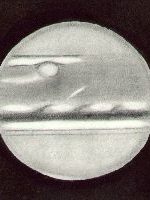
Observational drawings by Stephen Talyor (former member of the LAS), 1973 – 1974

Jupiter, drawn by Stephen Taylor, using a 15cm reflector at 00:05 UTC on 18th August, 1974

Jupiter, drawn by Stephen Taylor, using a 15cm reflector at 00:05 UTC on 18th August, 1974

Saturn, Tethys and Rhea, drawn by Stephen Taylor, at 20:40 UTC on 25th April, 1975

Saturn, Tethys and Rhea, drawn by Stephen Taylor, at 20:40 UTC on 25th April, 1975

South polar region of the Moon, drawn by Stephen Taylor, using a 6" reflector at x145. Lunation No. 626. Evening Terminator 38° East. Observation made at 00:15 - 01:20 UTC on 18th August, 1973

South polar region of the Moon, drawn by Stephen Taylor, using a 6″ reflector at x145. Lunation No. 626. Evening Terminator 38° East. Observation made at 00:15 – 01:20 UTC on 18th August, 1973

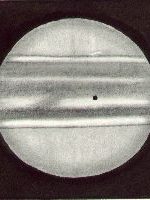
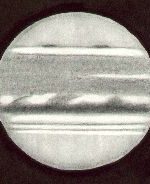
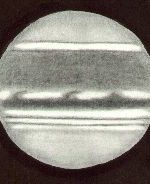
Jupiter (and moons) Observations by Ken Clarke, March – April,1991

All images © Ken Clarke, 1991

Mars Observations by Ken Clarke, November 1990

All images © Ken Clarke, 1990

Society News and Night Sky Notes – May 1998

Society News Headlines

  • May 1st – Pex Hill Observatory – Public Open Night.
  • May 1st – Comet Klemola at perihelion.
  • May 1st – Proposed rocket launch pad for the Caribbean could damage local wild life.
  • May 2nd – The Most distant galaxy has been found – 12.3 billion light years from Earth.
  • May 2nd – NASA to investigate why baby rats died on the recent shuttle mission STS-90.
  • May 2nd – Two newly discovered moons of Uranus are to be named Caliban and Sycorax from Shakespeare’s The Tempest.
  • May 3rd – BBC Sky at Night program with Patrick Moore. Subject:CCD’s in Astronomy. (Rept Sat 9th May on BBC2.)
  • May 3rd – ASTRONOMY DAY in the USA.
  • May 3rd – SOHO spacecraft discovered its 45th “sun-grazing” comet – C/1998 J1 (SOHO).
  • May 3rd – Moon to be used to salvage satellite which is in wrong Earth Orbit.
  • May 3rd – AURORAL ACTIVITY WARNING ISSUED – May 3rd – 5th.
  • May 3rd – Space shuttle Columbia lands at JFK center after 16 day Neuolab mission.
  • May 3rd – May 3rd 2000 planetary alinement puts insurance companies on alert.
  • May 3rd – Astronomers detect 2nd Big Bang – Gamma Ray Burst.
  • May 4th – Neptune Stationary.
  • May 4th – Eta Aquarids meteor shower max.
  • May 4th – StarTimes Headlines.
  • May 4th – Mercury: greatest elongation 27° West. ( Not seen from Liverpool).
  • May 4th – Images of recent major aurora display by Brian Rachford.
  • May 5th – RGO staff lose their Jobs To-day. More to follow in October 1998!.
  • May 5th – Astronomers new findings on 2nd big bang.
  • May 5th – Comet Barnard 3 at perihlion.
  • May 6th – Assembly shuttle flights for the International Space Station have been delayed until April 1999. NASA regrets Russian role in project.
  • May 7th – Australian astronomers view “STINGRAY” in space.
  • May 7th – Exploring The Outer Regions of the Solar System. A major report from the USA National Research Council.
  • May 8th – Juno Stationary.
  • May 8th – Communications Satellite HGS-1 fires its engine to travel to Moon and back.
  • May 8th – Hollywood Blockbuster Movie “Deep Impact” opens in the USA.
  • May 8th – New Galileo Images now on the Internet.
  • May 8th – RAS meeting – London at 16:00pm.
  • May 8th – More findings cast doubt of evidence of life on Mars.
  • May 10th – Mercury control building open again by NASA after 35 years.
  • May 10th – New Supernova 1998bu discovered in spiral galaxy M96 in Leo.
  • May 12th – Mercury 0.8° South of Saturn.
  • May 12th – First light for unit 1 of Very Large Telescope (VLT) approaches.
  • May 12th – Astronomers in the Czech Republic have named an asteroid “Dominik” after a goalie from the Winter Olympics.
  • May 14th – 25th Anniversary (1973) of launch of use space station Skylab.
  • May 14th – Planets around other stars – do they form slowly or quickly.
  • May 14th – Hubble Space Telescope gives astronomers detailed view of Black hole in Centaurus A.
  • May 14th – New lightweight shuttle external fuel ready for pre-launch tests.
  • May 14th – Scientists simulate “deep impact” effects with computer help.
  • May 15th – Liverpool Astronomical Society AGM, at 7pm Liverpool Museum Lecture Room – followed by Eclipse Feb’98 reports.
  • May 15th – New LAS Council for 1998-99. Details Here.
  • May 17th – Neptune 3° South of Moon.
  • May 17th – Astronomers find “diamond” the size of a planet. (White dwarf BPM37093).
  • May 17th – resupply cargo craft docks with space station MIR.
  • May 17th – Uranus Stationary.
  • May 18th – Hughes to send HGS-1 satellite on 2nd lunar flyby.
  • May 18th – ESA switches off Infrared Space Telescope (ISO) after successful mission.
  • May 18th – NASA to improve protocal in reporting information on near-Earth asteroids. – “DUCK”!.
  • May 18th – Soon you will be able to obtain satellite photos of your street via the web. (For a fee!).
  • May 18th – Uranus 3° South of Moon.
  • May 18th – IAU Colloquium 168 at Nenjing, China. (Ends May 22nd).
  • May 19th – Results from the Tropical Rainfall Measuring Mission (TRMM) indicates that lighting occurs mostly over land.
  • May 20th – Jupiter 0.4&3176; North of Moon.
  • May 20th – Astronomers at the Siding Springs Observatory find a group of galaxies masquereding as stars.
  • May 20th – Satellite brakedown has silenced millions of pagers and USA national public radio.
  • May 20th – A new form of neutron star called a “Magnetar” has been found to have the strongest stellar magnetic field.
  • May 20th – Evidence found in Italy that a shower of comets hit the Earth 36 million years ago.
  • May 21st – New images from Galileo of Europa now available.
  • May 21st – Launch of shuttle on mission STS-91 confirmed for June 2nd at 22:10pm BST.
  • May 21st – Astronomers in Australia get good views of Comet SOHO (1998J1).
  • May 21st – SPACE DAY in the U.S.A.
  • May 21st – Venus, Jupiter and Moon in close conjunction at 04:09am BST.
  • May 22nd – Salt on Europa suggests conditions to support some kind of life?.
  • May 22nd – Venus 1.7° North of Moon.
  • May 22nd – International Space Station building may now be delayed until November ’98 – one year late.
  • May 24th – Russians & NASA haggle over when to vaporize MIR space station. July or December 1999?.
  • May 24th – Mercury 3° North of Moon.
  • May 25th – Clues that Earth was hit by comet 4,000 years ago.
  • May 26th – American Geophysical Union – 1998 Spring Meeting at Boston USA. (Ends May 29th).
  • May 27th – First light for the VLT.
  • May 27th – Solar Quaking – News from Stanford University.
  • May 27th – BAA meeting at Saville Row, London.
  • May 27th – SolarQuakes have been detected on the surface of the Sun.
  • May 27th – Mars orbiter laser altimeter observes North polar cap and clouds on Mars.
  • May 27th – New photos of the Mars’98 Orbiter and Lander.
  • May 28th – Solar “cat scan” provides most detailed look to date at Corona.
  • May 28th – Auroral lights seen to hug Earth’s costlines.
  • May 28th – Pluto at Opposition.
  • May 28th – HST observes possible planet around another star.
  • May 28th – Streetlamps dim hopes for Internet.
  • May 28th – Cosmic clouds threaten Earth.
  • May 28th – NEAR spacecraft observation using a telescope sets new distant record for seeing man-made object.
  • May 28th – Evidence seen of non-polar ice on Mars.
  • May 28th – Venus 0.3° North of Saturn, low in the ENE sky at 04:00am BST.
  • May 29th – Observers in Japan discovery that two storms on Jupiter have merged into one.
  • May 29th – Magnetic energy burst on Sun detected by TRACE spacecraft.
  • May 30th – New safer Antenna developed for ISS space station.
  • May 30th – Earth crater in Australia to be renamed in honour of astro-geologist Gene Shoemaker, who died last year.
  • May 31st – Galileo spacecraft will fly-by Jupiter’s moon Europa for 15th time.
  • May 31st – The International Space Station (ISS) to begin being built in November this year.
  • May 31st – BBC TV’s Sky at Night with Dr Patrick Moore. Subject Planets of other Sun’s. (Rept Sat June 6th)


THE NIGHT SKY DURING THE MONTH OF MAY 1998

Will it be cloudy to-night?, ask the The U.K. Goverment Met Office Weather service.
To make your own star chart fo your location at any time, Click Here.

The Sun and Moon


All times are in BRITISH SUMMER TIME (BST). Times For Observer in Liverpool, Merseyside, England, U.K.

Latitude 53 degs 24 mins North.
Longitude +3.0 degs West.


              1st          6th        11th      16th      21st      26th        31st
SUNRISE    05:38        05:28      05:19     05:11     05:03     04:57       04:51
SUNSET     20:41        20:50      20:59     21:07     21:15     21:22       21:29
PHASES OF THE MOON DURING MAY 1998
NEW MOON

on 25th
at 20h:33m

FIRST QUARTER

on 3rd
at 11h:05m

FULL MOON

on 11th
at 15h:30m

LAST QUARTER

on 19th
at 05h:36m


THE PLANETS THIS MONTH.


MERCURY.

Mercury is at its greatest Western elongation on the 4th. However it does not appear above the horizon at the time of Civil Twilight as seen from Liverpool.


VENUS.

Venus gives the impression that it is ending a short morning apparition as it hugs the Eastern horizon before Sunrise, Its unisually shy appearance changes soon though and it will be seen slightly higher each month. On the 23rd at 00h Venus is 2.5° north of the Moon and on the 28th lies just 15′ north of Saturn.


MARS.

Mars is at solar conjunction this month and lies directly behind the Sun as seen from the Earth on the 12th.

MARSWATCH – latest observations of the red planet.


ASTEROIDS.

Juno is stationary on the 8th.

For More information on Asteroids Click Here.


JUPITER.

Jupiter is quite high up in the south east before Sunrise and is slowly beginning to brighten and increase its apparent diameter as it closes the distance to the Earth. On the 20th Jupiter is 1° north of the Moon.

Launched in October 1989, the Galileo Jupiter Probe entered orbit around the great planet on December 7th 1995. The Project Galileo Homepage will give you up-to-date information and the very latest images returned.


SATURN.

As mentioned above, Saturn lies close to Venus at the end of the month. On the 28th, with the two planets 15′ apart, use a medium magnification to note the phase of Venus and the inclined rings of Saturn. On the 23rd Ssturn is 2.5° north of the Moon.


URANUS and NEPTUNE.

Uranus rises at 01h:00m at the end of the month and transits at 05h:30m. At this time the sky is quite bright but early risers may catch Uranus and Neptune low in the South East.

 Positions for the 1st May:

                          R.A.                   DEC                    TRANSIT TIME           MAG
                      22h:01m:07s           -17°:37':40"                   05h:37m             5.8

Neptune is even more awkwardly placed in Sagittarius. Found low down in the South East sky.

 Positions for the 1st May:

                          R.A.                   DEC                    TRANSIT TIME           MAG
                      20h:17m:22s           -19°:19':47"                   06h:53m             7.9

PLUTO.

Pluto can be found on the border of Ophiuchus and Scorpius, above and to the right of the mag 2.6 star Zeta Scorpii. The best time to look for the planet is around New Moon. The dates below will be a guide for planning observations.

Positions for May are when pluto's elongation angle is greater than 90°.
DATE                      R.A.                   DEC                   TRANSIT TIME

May  1st               16h:27m:57s            -09°:10':58"                 03h:07m

May  11th              16h:27m:00s            -09°:07':52"                 02h:27m

May  21st              16h:25m:58s            -09°:05':17"                 01h:47m

Pluto is best seen between April 19th – May 3rd, and May 19th – June 2nd.


S&T Outer Planet Finder Chart.


 METEORS.

  • May 5th Eta Aquarids (40 per hour) Fairly favourable.
  • May 13th ALPHA SCORPIIDS (20 per hour) Unfavourable.

 COMETS.

OCCULTATIONS.

  • May 11th at 23h:30m Reappearance of Gamma Librae

Summer Lecture Program, May – September 1998

Patrick Moore at the British Astronomical Association Centenary Meeting, hosted by Liverpool Astronomical Society, 15th September 1990

Patrick Moore at the British Astronomical Association Centenary Meeting, hosted by Liverpool Astronomical Society, 15th September 1990

All lectures listed below take place on weekday Weds in the basement Lecture Theatre of Liverpool Museum, (part of N.M.G.M). Lecture Room entrance is via disabled door at the side of Museum main stairway in William Brown Street.
Meetings begin at 7pm, until approx 9pm. Please note that details of other lectures are yet to be confirmed, and on certain dates other activities will take place at the Liverpool A.S. City Observatory, Liverpool Museum (NMGM).

Full Details from the Liverpool A.S. Director of Observatories:
Mr Geoff Regan
(Contact details removed as no longer valid)

May 1998

  • 27th : Murad Ghorbal – Southern Constellations. (Venue under review)

June 1998

  • 10th : Murad Ghorbal – Astronomy at Stonehenge
  • 17th : Ron Kelley – Variable Stars
  • 24th : Eric Jones – Solar Eclipses

July 1998

  • 8th : Gerard Gilligan – Light Pollution – The Story So Far!
  • 15th : Phil Harman – Astronomy on the Web
  • 22nd : Steven Hughes – Double Stars

August 1998

  • 12th : John Knott – Venus – An Amateurs View
  • 26th : David Forshaw – Sun on Water

September 1998

The Total Solar Eclipse Of 26th February, 1998: A Liverpool Astronomical Society Perspective –

by Dr. John Eric Jones

The LAS have been sending members on total solar eclipse expeditions since the 1880’s. One saros ago no less than 15 members went to Kenya to observe approximately 4 minutes of totality. This was a pivotal eclipse. Although there was already much experience of eclipses amongst some members, it was the first eclipse at which several experiments were deployed which have continued regularly to the present day.

This year a dozen members went to sites in Venezuela and Curacao to observe the eclipse of February 26th. The great majority went to a beach at Knipbaai in the far North-West of Curacao. At this location, apart from photography, the two main experiments were timing the duration of totality and attempting to video shadow bands if they occurred.

Shadow bands are notoriously difficult to photograph or film. In 1976 Graham Broadbent of the LAS obtained photographs of them at an eclipse in Zanzibar as displayed on a standard 1 metre diameter shadow band disc. The disc follows the practice of Edgar M.Paulton and Richard L.Feldman. The latter studied shadow bands for over 40 years (see Sky & Telescope, Vol 39, No2 February 1970 pg 132-133). In recent years Eric Strach (or rather Mrs M.Strach!) took on the onerous task of hauling shadow band discs across the globe to eclipse sites usually without success. A faint video image was recorded in 1991 but this year marked a crowning achievement as distinct shadow bands were recorded both before and after totality. Video frames and a report have appeared on the LAS web site through the courtesy of LAS member Mr Gerard Gilligan who arranged processing of the video at Liverpool University.

Unfortunately Eric Strach’s vocal signals at 2nd and 3rd contacts were drowned on his tape by shouts of excitement of the surrounding observers. However another timing experiment was performed by LAS member Eric Jones at a different location. Because of this very fact of background noise, Eric Jones accepted an invitation from Professor John Parkinson (Sheffield Hallam University) to view the eclipse from a quiet site at the Knip Landhuis ( a rather elegant Plantation house roughly 2km from Knipbaai) Another possible location was next to the official public viewing site at Watamula in the very north of the island where under Professor Parkinson’s direction a gigantic wall of cargo containers, stacked two high, had been positioned to protect observers from the constant trade winds which sculpt the local low thorn bushes into fantastic shapes.


However as eclipse day dawned with local cloud cover and rain it was decided to change site as Knip Landhuis was under a plume of clouds generated by the local St Cristoffelberg mountain. It was therefore decided to use a villa at the Kadushi Cliffs Resort just north of Westpunt. As we set up, our activities were filmed by the BBC for a possible program to be broadcast in the UK before the 1999 eclipse. Colin Davies and Eric Jones occupied the balcony of the villa whilst the BBC and John Parkinson’s group occupied the patio in front.

Fortunately as the morning proceeded the sky cleared and by the time of the eclipse the sky was perfectly clear. We were confident that the sky would be clear, as a ship (The Holland- America Line Statendam) anchored near us just a few hundred metres offshore. They presumably had weather satellite systems and so the fact they had selected our location meant we were in a good spot.

We viewed the usual pre-eclipse phenomena. The BBC filmed crescents on the balcony floor underneath a plastic plant held high in the air by Colin. Shortly before totality a parrot-like bird crashed into the balcony next to Colin and the video camera. The bird was obviously disoriented by the eclipse and so Colin tried to soothe it. About 30 seconds before totality the cry “shadow bands” went up and a quick glance revealed a magnificent display of shadow bands visible not only on a small shadow band screen next to me but also on the white-washed walls of the villa.

In addition to the timing experiments a programme of still photography was carried out. In fact it proceeded so well that an extra bulb exposure was added. It is easy to lose track of time during totality so a series of electronic alarms had been set up as a reminder. This allowed a full 50 seconds of spare time to look around to enjoy the near-minimum style of corona, the nearby planets and the environment which was enlivened by the explosions of fireworks.

Three different timing methods were used:

  1. Motorised electronically controlled camera.
  2. Video.
  3. Vocal signals recorded onto tape together with time signals.

They all worked perfectly.

We also received further data from other locations. At Knipbaai the President of the British Astronomical Association, Martin Mobberley took a video which provided an extra timing. Also at the same location Mr. Shelley Fey who is an experienced eclipse observer and whose timings have been a valuable supplement to our own data at previous eclipses provided a further measurement of the duration of totality.In fact we also received a video with associated GPS measurement from yet a third location on the island of Curacao.


Timing experiments, when analysed, can yield information on possible solar diameter variation. The analysis of these timings is now almost complete but they all give a very consistent picture that the solar radius was about 0.4 arc-seconds larger than the adopted IAU value at the time of the eclipse. This is from 6 different measurements using 4 different techniques at three locations. The consistency was very satisfying.
There was one final bonus after all the excitement of the eclipse itself. After most people had returned home, Colin Davies and Eric Jones lingered on in Bonaire. At approximately 9.17pm local time on the 14th March they were treated to an occultation of Aldebaran close to the southern limb of the Moon which was recorded on video. This brought a very successful eclipse expedition to a close.